Read Journal 1637 – Vol 67 No 1 – Equivalent fire resistance of composite slab made with lightweight concrete
CPD NO: SAICE/OJ/25/67/1/13/28
0.2 ECSA CPD points allocated
Course Content
Read Journal 1637 – Vol 67 No 1 – Equivalent fire resistance of composite slab made with lightweight concrete (Journal Article)
You don't currently have access to this content
Read Journal 1637 – Vol 67 No 1 – Equivalent fire resistance of composite slab made with lightweight concrete (Final Assessment)
You don't currently have access to this content
Read Journal 1637 – Vol 67 No 1 – Equivalent fire resistance of composite slab made with lightweight concrete (MCQ Assessment)
You don't currently have access to this content
Author
Current Status
Not Enrolled
Enroll in this course to get access
Price
ZAR 370.00
Get Started
discounted for SAICE members
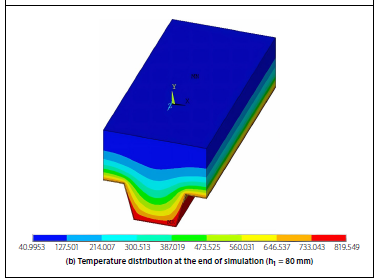
This study examines the fire behaviour of composite slabs made with lightweight concrete, following the fire insulation criteria “I” outlined in Eurocode 4 (CEN 2005). The parametric analysis includes the effect of the airgap, moisture content, thermal properties of the lightweight concrete, and geometrical aspects. Fire resistance time is calculated using two
methods – the analytical method from Appendix D of Eurocode 4 (CEN 2005) and a numerical method (ANSYS n.d.). Finite element analysis shows that the moisture content of lightweight concrete significantly impacts fire resistance time. When the moisture content exceeds 3%, the Eurocode method predicts a lower fire resistance time compared to the simulation method. The prediction models indicate that, to achieve the same fire resistance time, a normal-weight concrete section must be 7% thicker than a lightweight concrete section.
Keywords: composite slab, lightweight concrete, fire resistance, moisture content, numerical simulation