Read Journal 1525 Volume 59 No 3 – Seepage column hydraulic conductivity tests in the geotechnical centrifuge
CPD NO: SAICE/OJ/2026/59/3/16/2029
0.2 ECSA CPD points allocated
Course Content
Read Journal 1525 Volume 59 No 3 – Seepage column hydraulic conductivity tests in the geotechnical centrifuge (Journal Article)
You don't currently have access to this content
Read Journal 1525 Volume 59 No 3 – Seepage column hydraulic conductivity tests in the geotechnical centrifuge (Final Assessment)
You don't currently have access to this content
Read Journal 1525 Volume 59 No 3 – Seepage column hydraulic conductivity tests in the geotechnical centrifuge (MCQ Assessment)
You don't currently have access to this content
Author
Current Status
Not Enrolled
Enroll in this course to get access
Price
ZAR 370.00
Get Started
discounted for SAICE members
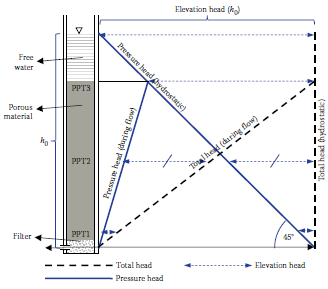
Provided that inter-particle flow remains laminar, hydraulic conductivity tests can be carried out in a centrifuge to accelerate flow, allowing the hydraulic conductivity of relatively impervious materials to be measured within a reasonable time. It is well documented that the inter-particle flow velocity in the centrifuge increases linearly with acceleration, and a debate in the literature deals with whether hydraulic conductivity also scales with acceleration or not. A number
of hydraulic conductivity tests were carried out using seepage columns in the geotechnical centrifuge in which pore pressures were recorded within the samples during testing. When hydraulic conductivity is calculated from the hydrostatic potentials measured during testing, the hydraulic conductivity is found to be independent of the imposed acceleration. It is therefore advocated that the hydrostatic potential is scaled in the centrifuge rather than the hydraulic conductivity. It must therefore be recognised that the hydraulic gradient used in the conductivity calculation does not remain constant, but changes with the imposed acceleration.