Read Journals 1969 – Vol 68 No 3 – A socio-technical systems (STS) analysis of road fatalities in Gauteng province (2015–2019)
CPD NO: SAICE/OJ/26/68/3/37/2029
0.2 ECSA CPD points allocated
Course Content
Read Journals 1969 – Vol 68 No 3 – A socio-technical systems (STS) analysis of road fatalities in Gauteng province (2015–2019) – Journal Article
You don't currently have access to this content
Read Journals 1969 – Vol 68 No 3 – A socio-technical systems (STS) analysis of road fatalities in Gauteng province (2015–2019) – Final Assessment
You don't currently have access to this content
Read Journals 1969 – Vol 68 No 3 – A socio-technical systems (STS) analysis of road fatalities in Gauteng province (2015–2019) – MCQ Assessment
You don't currently have access to this content
Author
Current Status
Not Enrolled
Enroll in this course to get access
Price
ZAR 370.00
Get Started
discounted for SAICE members
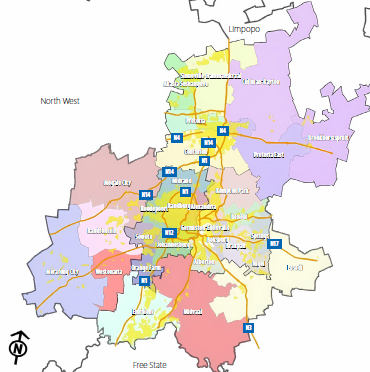
Road safety in Gauteng represents a persistent and complex socio-technical challenge, shaped by dynamic interactions between human factors, engineering design, institutional governance, and socio-economic contexts. This study employs a socio-technical systems (STS) framework to analyse the multifaceted contributors to road traffic fatalities in the province for 2015 to 2019; data from 2020 was excluded due to covid-19 mobility distortions that would have confounded analysis of underlying systemic risk factors. Utilising a mixed methods, convergent design, the research integrates qualitative institutional data with quantitative fatality and exposure metrics to model the interplay of social and technical subsystems. Key findings reveal that temporal variables (time of day, seasonal weather patterns), infrastructural and operational factors (road class, posted speed limits), and socio-economic pressures (unemployment rates, population density, GDP per capita) are interconnected within the STS and collectively exacerbate fatality risk. The Spatially Aware Poisson Random Forest (SAPRF) model achieved MAE ≈ 0.031, RMSE ≈ 0.109, and R² ≈ 0.958, substantially outperforming standard random forest (R² ≈ 0.872) and Poisson regression (R² ≈ 0.06). The novelty lies in the first application of SAPRF in a South African road safety context, integrating STS theory with spatially aware machine learning. The study concludes that prevailing behaviour-centric interventions are insufficient and argues for a paradigm shift toward integrated, multi-level policy and design interventions targeting the root systemic couplings and feedback mechanisms inherent in the road transport system.