Read Journals 1915 – Vol 68 No 3 – Implication of reliability categories on the structural design of higher-risk buildings
CPD NO: SAICE/OJ/26/68/3/26/2029
0.2 ECSA CPD points allocated
Course Content
Read Journals 1915 – Vol 68 No 3 – Implication of reliability categories on the structural design of higher-risk buildings – Journal Article
You don't currently have access to this content
Read Journals 1915 – Vol 68 No 3 – Implication of reliability categories on the structural design of higher-risk buildings – Final Assessment
You don't currently have access to this content
Read Journals 1915 – Vol 68 No 3 – Implication of reliability categories on the structural design of higher-risk buildings – MCQ Assessment
You don't currently have access to this content
Author
Current Status
Not Enrolled
Enroll in this course to get access
Price
ZAR 370.00
Get Started
discounted for SAICE members
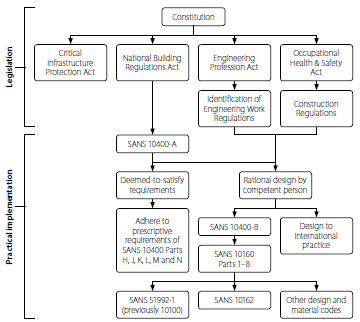
This paper reviews the impact of reliability-based design considerations for higher-risk buildings (high-rise, hospitals, critical infrastructure, etc.) in South Africa. SANS 10160-1 Annex A and B provide guidance on enhanced partial safety factors for loading, third-party design verification, and additional site supervision requirements for such structures. This work reviews the legal framework governing building design, following the hierarchy from constitution to design standards, emphasising the need for engineering judgement for non-standard and higher-risk buildings. The impact of supplementary legislation such as the Critical Infrastructure Protection Act (8 of 2019) are pointed to, highlighting the increased reliability requirements. The reliability framework in SANS 10160-1 is considered and the assumptions inherent in general building design are presented, identifying how they may not be fully representative when aspects such as post disaster function, high loss of life, large economic loss, and similar factors must be considered. As a result, anecdotal evidence suggests that the more onerous design and supervision requirements of higher-risk structures, such as increased partial safety factors, third-party checking of structural designs, and construction supervision are not currently being carried out in South Africa, despite SANS 10160-1 proposing it as best practice. Given their ability to prevent both calculation errors and conceptual errors related to structural robustness, improved design supervision and third party checking are proposed as critical requirements for high-risk structures.