Read Journals 1824 – Vol 68 No 1 – Calibrated finite element modelling of the progressive structural response of the Yusufeli concrete arch dam during impoundment
CPD NO: SAICE/OJ/26/68/1/2/2029
0.2 ECSA CPD points allocated
Course Content
Read Journals 1824 – Vol 68 No 1 – Calibrated finite element modelling of the progressive structural response of the Yusufeli concrete arch dam during impoundment (Journal Article)
You don't currently have access to this content
Read Journals 1824 – Vol 68 No 1 – Calibrated finite element modelling of the progressive structural response of the Yusufeli concrete arch dam during impoundment (Final Assessment)
You don't currently have access to this content
Read Journals 1824 – Vol 68 No 1 – Calibrated finite element modelling of the progressive structural response of the Yusufeli concrete arch dam during impoundment (MCQ Assessment)
You don't currently have access to this content
Author
Current Status
Not Enrolled
Enroll in this course to get access
Price
ZAR 370.00
Get Started
discounted for SAICE members
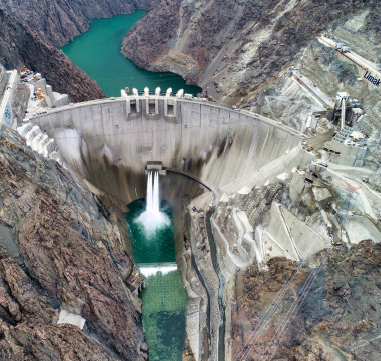
Concrete arch dams are complex three-dimensional structures subject to multifaceted loading conditions. Design of concrete arch dams follows an iterative structural analysis approach in which advanced numerical modelling has become the current state-of-the-art tool for analysis. Advancement in the processing power of the personal computer and commercial availability of user friendly and efficient numerical modelling software packages has enabled the development
of high-resolution numerical models of arch dams with complex foundation conditions. The finite element method can be used to create elaborate three-dimensional models of concrete arch dams with complex foundation conditions. The models are however only as reliable as the modelling assumption inputs, particularly the constitutive material modelling parameters. Material testing procedures of the dam concrete and foundation conditions provide a good
estimate of the material modelling constitutive parameters, but the inherent variance in these test results and the difference in conditions between site and laboratory, mean these parameters may not necessarily accurately reflect those present under dam operating conditions. As a result, it is important to validate the material model parameters assumed for the finite element model by calibrating the deformation response of the dam under actual loading conditions. This study examines the validation of a finite element model of the Yusufeli arch dam in Turkey, during reservoir impoundment, by calibrating the computed static deformation response predicted by the model to that of the dam observed from deformation measurement instrumentation. The model of the dam was shown to be well calibrated by the close comparison between predicted and measured displacement. Results from the model calibration process are discussed and presented, providing insight into the deformation behaviour of a large concrete arch dam during impoundment and the accuracy with which this can be modelled using linear elastic material modelling assumptions. The calibrated model was used to study the progressive structural behaviour of a large concrete arch dam during impoundment of the reservoir. Due to the inherently favourable structural mode of an arch in compression, it is shown that the stress state of a loaded concrete arch dam is preferable to that of an empty one. These are important considerations to be made during first filling of the dam reservoir. A comprehensive validation of the modelled stress and strain behaviour of the dam in relation to that measured by stress meters and strain gauges was not achieved due to numerous inconsistencies in measurement data obtained from these instruments.