Read Journals 1748 – Vol 67 No 3 – Capacity-based feasibility boundaries for shared priority infrastructure for minibus taxis at signalised intersections
CPD NO: SAICE/OJ/26/67/3/18/29
0.2 ECSA CPD points allocated
Course Content
Read Journals 1748 – Vol 67 No 3 – Capacity-based feasibility boundaries for shared priority infrastructure for minibus taxis at signalised intersections (Journal Article)
You don't currently have access to this content
Read Journals 1748 – Vol 67 No 3 – Capacity-based feasibility boundaries for shared priority infrastructure for minibus taxis at signalised intersections (Final Assessment)
You don't currently have access to this content
Read Journals 1748 – Vol 67 No 3 – Capacity-based feasibility boundaries for shared priority infrastructure for minibus taxis at signalised intersections (MCQ Assessment)
You don't currently have access to this content
Author
Current Status
Not Enrolled
Enroll in this course to get access
Price
ZAR 370.00
Get Started
discounted for SAICE members
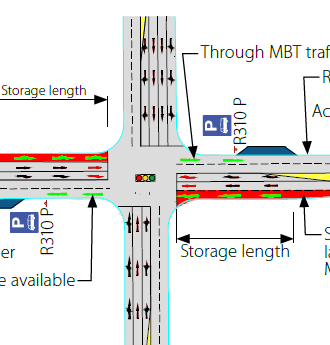
The minibus taxi (MBT) is the most widely used mode of public transport in South Africa, accounting for over 66% of peak hour public transport trips. Unlike buses, which benefit from dedicated infrastructure such as bus rapid transit (BRT) lanes with priority transit signals at intersections, MBTs currently lack such priority infrastructure to enhance their efficiency. Efforts by South African road authorities to provide priority infrastructure for MBTs are hindered by the absence of technical guidance on planning, design, and feasibility. This study addresses this gap by developing an analytical method to determine feasible traffic volumes for shared queue bypass priority lanes at pre-timed signalised intersections. The basic problem is that any priority given to MBT vehicles likely reduces the capacity available to other vehicles, which could lead to performance losses. Taking account of this interaction between MBT and general traffic volumes and the reallocation of vehicles to different lanes, we define feasibility as the combination of volumes where capacity is not exceeded for either vehicle type while still offering potential delay savings for MBTs. We produce a set of graphs that can serve as an initial assessment of whether intersections with medium to high MBT volumes may qualify for priority treatment, considering only existing geometric and traffic characteristics. Additionally, the study provides guidance on expected storage lengths for these priority lanes. Overall, the findings indicate that shared queue bypass lanes are effective when medium taxi volumes (approximately 20 PCU/hr to 85 PCU/hr) are present, provided that turning traffic in the shared left-turn lane is not excessively high (between 50 PCU/hr and 640 PCU/hr, depending on green time). Noting that drivers may adapt to priority intersections in unknown ways, we recommend further studies on the traffic safety implications of priority treatments under real operating conditions.
Keywords: Minibus taxi, shared queue bypass lane, intersection, Highway Capacity Manual, paratransit, transit priority